
Most of us don’t give the role of saliva a second thought, dismissing it as ordinary. But the truth is, saliva plays a powerful role in keeping us healthy. From helping us digest food to protecting against infection, this natural fluid is a frontline defender of both oral and systemic health. When saliva production drops, resulting in dry mouth (also known as xerostomia), the effects can cause ripples throughout the body.
In this blog, we’ll explore why saliva matters, how it supports everything from digestion to immunity, and what happens when dry mouth disrupts this balance.
Saliva and Digestion: More Than Moisture
The role of saliva is the very first step in the digestive process. It contains enzymes like amylase that begin breaking down starches the moment food enters your mouth. Without this step, your stomach and intestines have to work much harder to extract nutrients.
Just as important, saliva lubricates each bite, making it easier to chew and swallow. It acts like a natural slide, helping food move smoothly from your mouth to your throat. Without adequate saliva production, swallowing can become difficult or even painful, leading to poor nutrition and overall discomfort.
For people with chronic dry mouth, this lack of saliva can contribute to both digestive issues and reduced quality of life.
Saliva and Speech: Finding Your Voice
It’s not just about eating, however; saliva also helps make speaking possible. By keeping the tongue, lips, and vocal tract moist, saliva allows words to form clearly and smoothly. The role of saliva in speech is often overlooked, but without it, clear communication becomes difficult.
When saliva is lacking, speech can become hoarse, slurred, or strained. Many people with dry mouth find themselves needing to sip water constantly just to carry on a conversation. Over time, this can impact confidence in social settings and lead to frustration.

Saliva and Systemic Health
Your mouth is home to billions of bacteria and saliva helps maintain balance by washing away food particles and neutralizing acids produced by bacteria. This protective action is key to helping prevent cavities, gum disease, and oral infections.
When saliva production decreases, harmful bacteria can thrive. The result? Bad breath, tooth decay, and inflamed gums. But the effects don’t stop there. Research shows that oral health is closely tied to overall health – meaning that saliva’s role in managing the oral microbiome has body-wide implications.
The role of saliva extends far beyond the mouth, contributing directly to whole-body health. It acts as a first line of defense against infection, a diagnostic tool for underlying conditions, and a vital support system for daily functions like eating and speaking. Without adequate saliva, the body loses one of its most important protectors.
Immune support: Saliva contains antimicrobial proteins and antibodies that act as a first line of defense against pathogens. When saliva levels drop, the body loses this protective barrier.
Disease detection: Saliva can reveal biomarkers for stress, infections, and even chronic conditions like diabetes, making it a valuable diagnostic fluid. Low saliva production has been associated with higher rates of gum disease and oral infections in people with diabetes.
Heart and metabolic health: Poor oral health, often linked to low saliva production, has been associated with higher risks of cardiovascular disease. Research shows a strong connection between oral health and heart health. When saliva can’t wash away harmful bacteria, those bacteria may enter the bloodstream and increase inflammation, which is linked to a higher risk of cardiovascular disease.
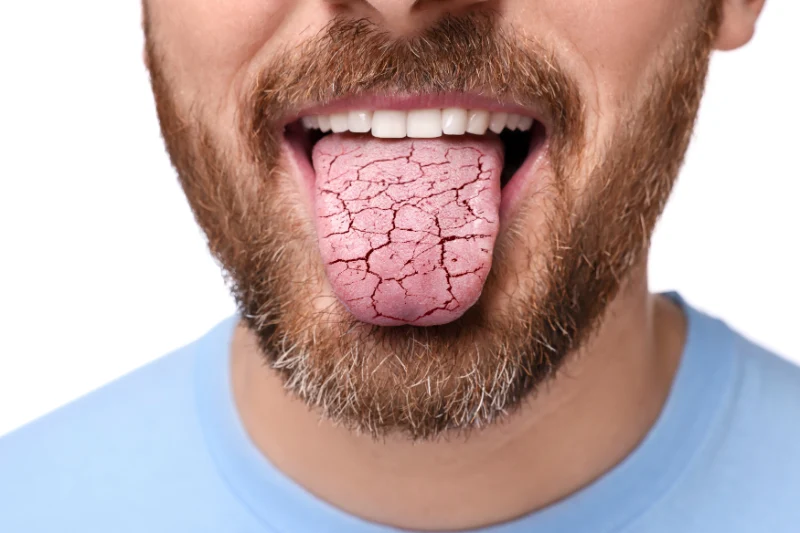
Dry Mouth: Causes and Risks
So, what happens when saliva runs dry? Dry mouth, or xerostomia, is more than just a nuisance. If left untreated, it can set off a chain reaction of oral and systemic problems.
Common causes of dry mouth include:
- Medications (antidepressants, antihistamines, blood pressure drugs)
- Aging (natural decline in saliva production)
- Dehydration
- Autoimmune disorders (such as Sjögren’s syndrome)
- Lifestyle factors (smoking, excessive caffeine, or alcohol)
Risks associated with chronic dry mouth:
- Higher rates of cavities and tooth decay
- Gum disease and infections
- Difficulty speaking and swallowing
- Nutritional deficiencies
- Disrupted sleep from nighttime thirst or discomfort
A dry mouth may seem like a small issue, but its long-term health effects can be significant if ignored. The role of saliva in protecting oral and systemic health means that when it’s lacking, the entire body can be impacted.

Supporting Healthy Saliva Production
The good news: there are steps you can take to protect and support healthy saliva flow.
- Stay hydrated: Water is the simplest saliva booster.
- Eat a balanced diet: Crunchy fruits and vegetables can stimulate saliva flow naturally.
- Avoid drying habits: Cut back on alcohol, tobacco, and excessive caffeine.
- Practice good oral hygiene: Brushing and flossing help saliva do its job more effectively.
- Consider medical or therapeutic support: Artificial saliva products like Lubricity®, saliva-stimulating lozenges, or lubricating oral solutions can provide relief when natural saliva isn’t enough.
For those living with chronic dry mouth, seeking a professional solution isn’t just about comfort, it’s about long-term oral and systemic health.
The Role of Saliva as a Health Ally
Saliva fuels digestion, protects speech, balances the oral microbiome, and safeguards the body from disease. When saliva levels fall short, dry mouth can trigger problems that extend far beyond discomfort. Saliva helps protect against harmful bacteria, supports your immune system, and even provides clues about your body’s overall condition. When the body’s production of saliva decreases, it can affect everything from oral health to heart, metabolic, and immune health.
The next time you sip water or notice your mouth feeling dry, remember—the role of saliva goes far beyond spit. It’s one of the body’s most important natural protectors, and supporting healthy saliva production can make a real difference for both oral and systemic health. If dry mouth is disrupting your daily life, consider exploring solutions like Lubricity to help restore comfort and support long-term oral health.